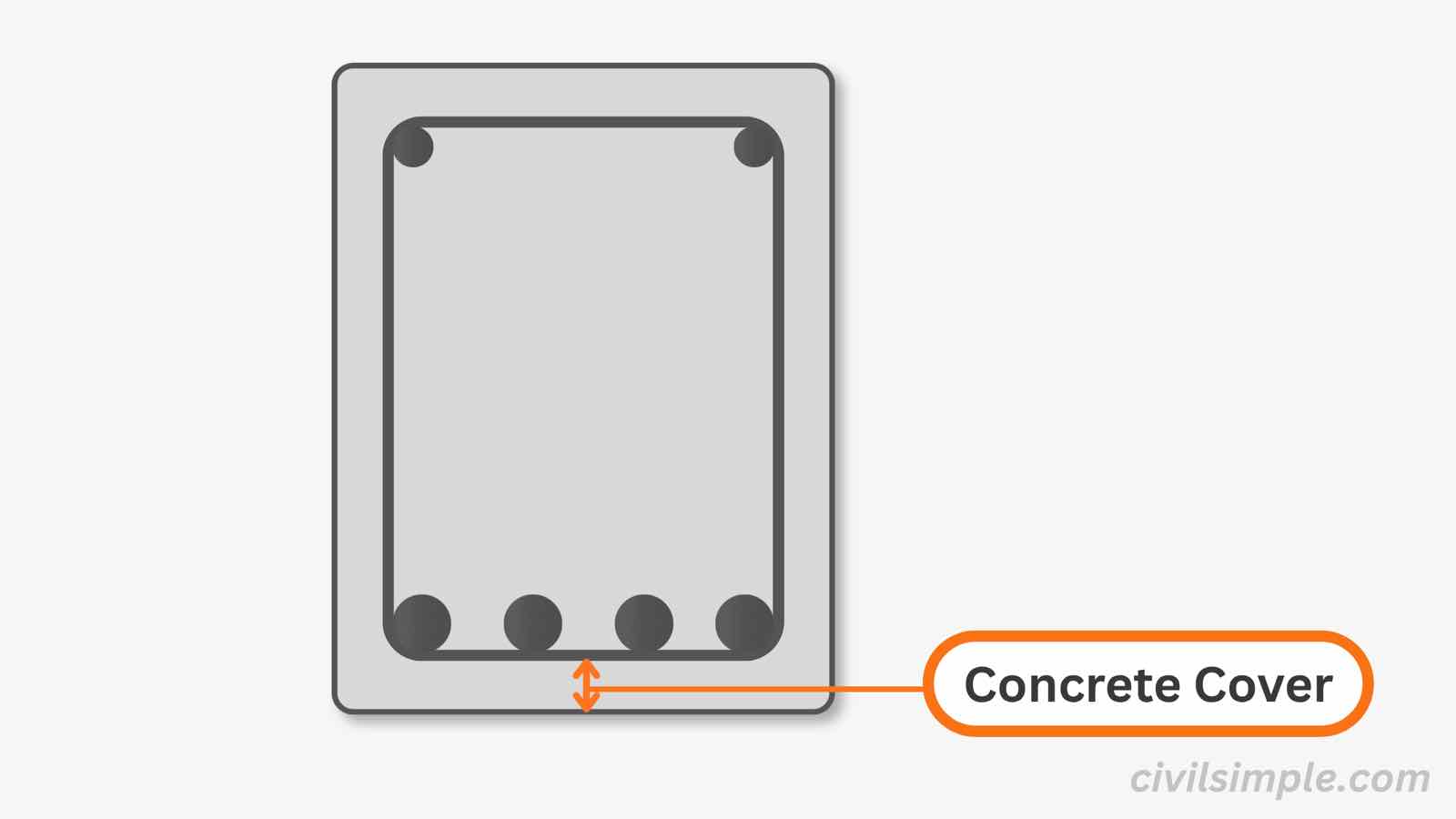
❓ What is concrete cover?
Concrete Cover is the distance between outermost reinforcement and concrete surface
🤔 Why we need concrete cover?
First, let's imagine if there is no cover at all, the section will:
-
Rusted Right Away
-
Get Fired Right Away
- Crack due to insufficient Bond
Therefore, we need concrete cover to contribute to:
🛡️ Durability
Concrete cover shields rebar from moisture and chlorides. Without sufficient cover, carbonation front reaches the steel, initiating rust that expands and spalls the section.
🔥 Fire Resistance
Concrete can act as a thermal insulator. Axis distance from bar centre to exposed face controls how quickly steel heats above its critical temperature (~500 °C) during a fire event.
🔗 Material Bond
Adequate cover ensures enough concrete surrounds each bar so full anchorage can develop. Too little cover may lead to splitting failure before the reinforcement reaches yield stress.
🏗️ Application in real construction site
In construction, concrete spacer blocks are used to maintain concrete cover. They are typically placed at about 1500 mm centre-to-centre spacing.
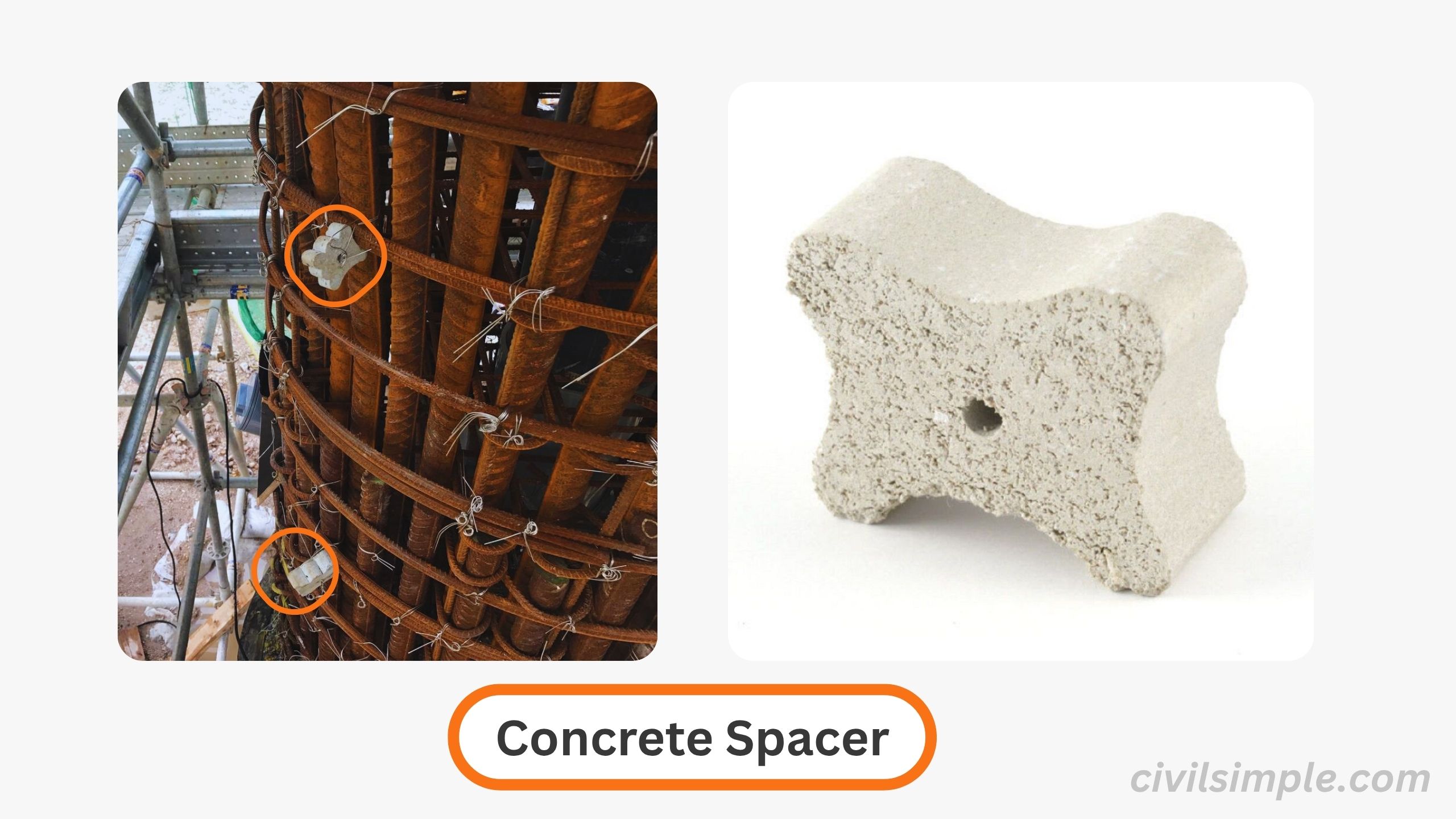
The image below illustrates how they are applied in construction:
- Installation stage: after all rebar fixing, before putting concrete block.
Concrete spacer blocks usually have two different faces to accommodate different concrete cover requirements.
↔️ Range of Concrete Cover
It normally ranges from 20 mm to 65 mm and is affected by the following factors: Cl. 4.4.1, BSEN1992-1-1
1. Exposure conditions: Severe environments such as marine exposure, chlorides, or de-icing salts require larger cover for durability.
2. Durability requirement: Longer design working life requires increased cover.
3. Concrete strength: Lower strength concrete generally requires higher cover for durability performance.
- More details please refer to Section 4 of BSEN1992-1-1:2004
Common nominal cover tables from EC2
| Exposure class | Description | Typical nominal cover | Unit |
|---|---|---|---|
| X0 | No risk of corrosion or attack | 20 | mm |
| XC1 | Dry or permanently wet | 25 | mm |
| XC2 / XC3 | Wet, rarely dry / Moderate humidity | 30 | mm |
| XC4 | Cyclic wet and dry | 35 | mm |
| XD / XS | Chlorides / Sea exposure | 40–50 | mm |
* Details of exact cover to be used, please refer to section 4 of BSEN1992-1-1:2004
🧮 How concrete cover affects RC section calculation ?
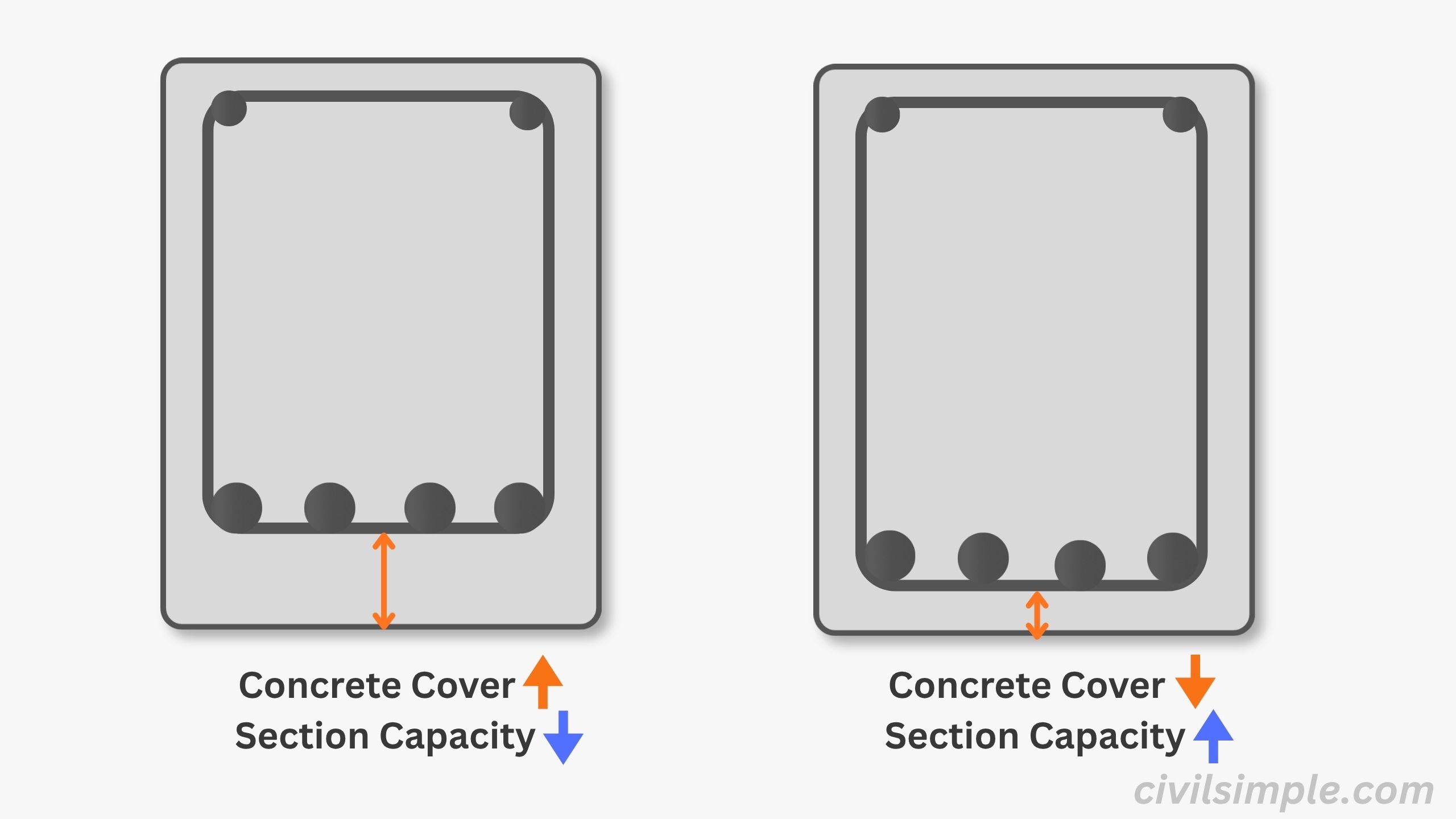
Size of concrete cover directly affects calculation of effective depth of a section.
Practical implication
The relationships between concrete cover, effective depth, and moment capacity are shown below.
Therefore, accidentally increased concrete cover (may occur in construction site due to site constraint or some workmanship issue) will reduce the effective depth, hence reduce the moment capacity.
If the abovementioned case happened, and you are not sure if the section capacity is sufficient or not. Feel free to try our service. We aimed to provide a professional and ready-to-use pdf report in a few clicks. Hope it can help 🚀!
📝Summary & Key Takeaways
- Concrete cover is an essential component of every reinforced concrete section.
- It provides protection against rust and fire, and allows reinforcement to develop bond strength.
- Concrete spacers are used to achieve the required concrete cover on construction sites.
- The required cover varies depending on how severe the exposure conditions are.
- Misuse of concrete cover will affect the performance of the concrete section.

CivilSimple Team
The CivilSimple Team writes practical engineering guides for the profession and the curious. All articles are reviewed for technical accuracy before publication.