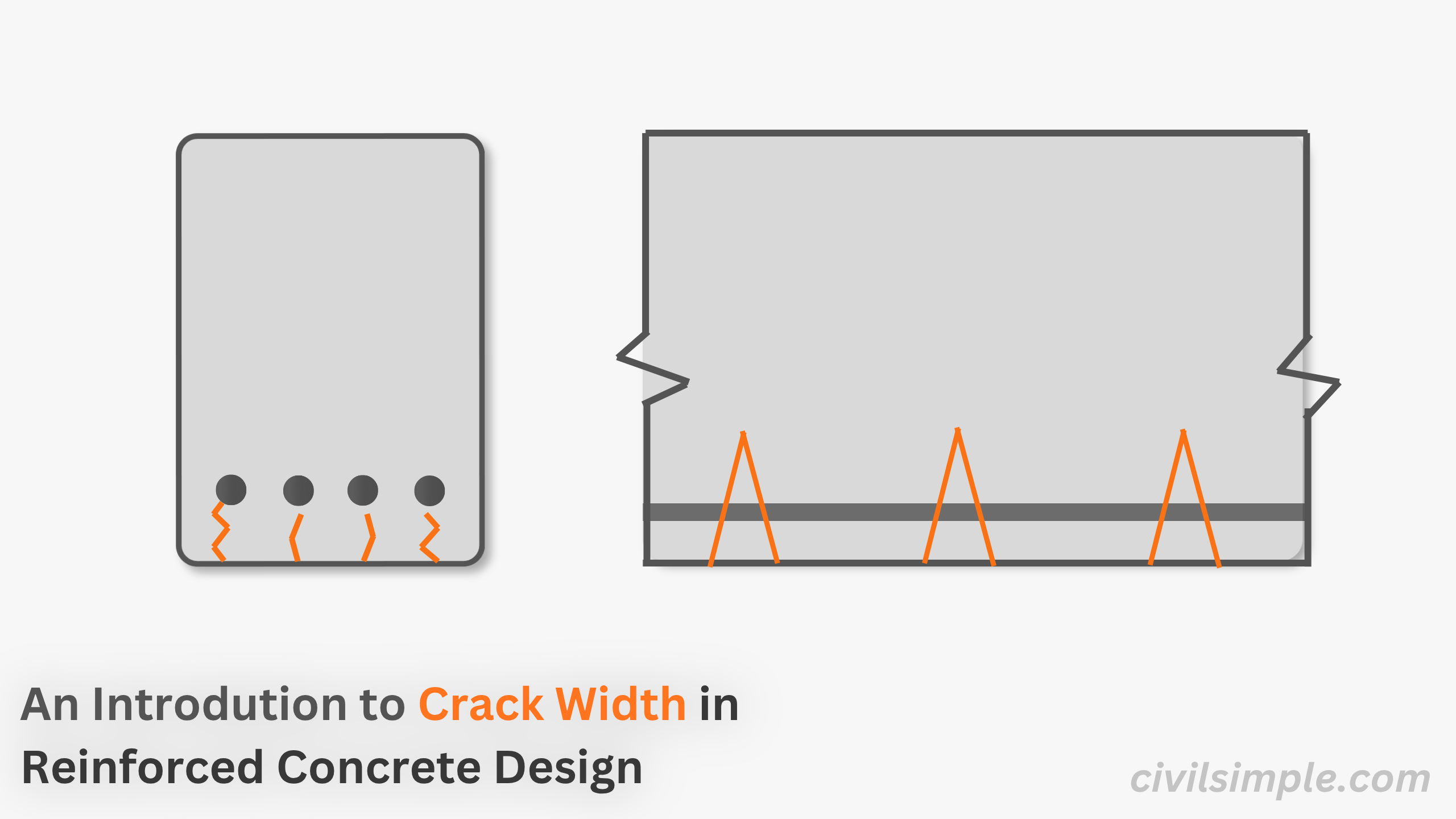
Brief Introduction of crack width
When we first designing reinforced concrete, it may feel strange to realize that the material is actually supposed to crack.
Before diving into the complex calculations, let's understand these five concepts about crack width:
- Crack width is a Serviceability Limit State (SLS) check.
- Concrete is allowed to crack to a certain extent under working loads.
- Excessive cracking must be limited to protect durability and appearance.
- Cracks are driven by two main causes: flexural loads and thermal/shrinkage effects.
- Flexural crack width is calculated based on maximum crack spacing and strain difference.
1. Crack Width is a Serviceability Limit State(SLS) Check
Structural design is broadly split into two categories:
- Ultimate Limit State (ULS) and
- Serviceability Limit State (SLS).
ULS is about safety and preventing collapse under extreme loads while SLS is about the everyday performance of the structure.
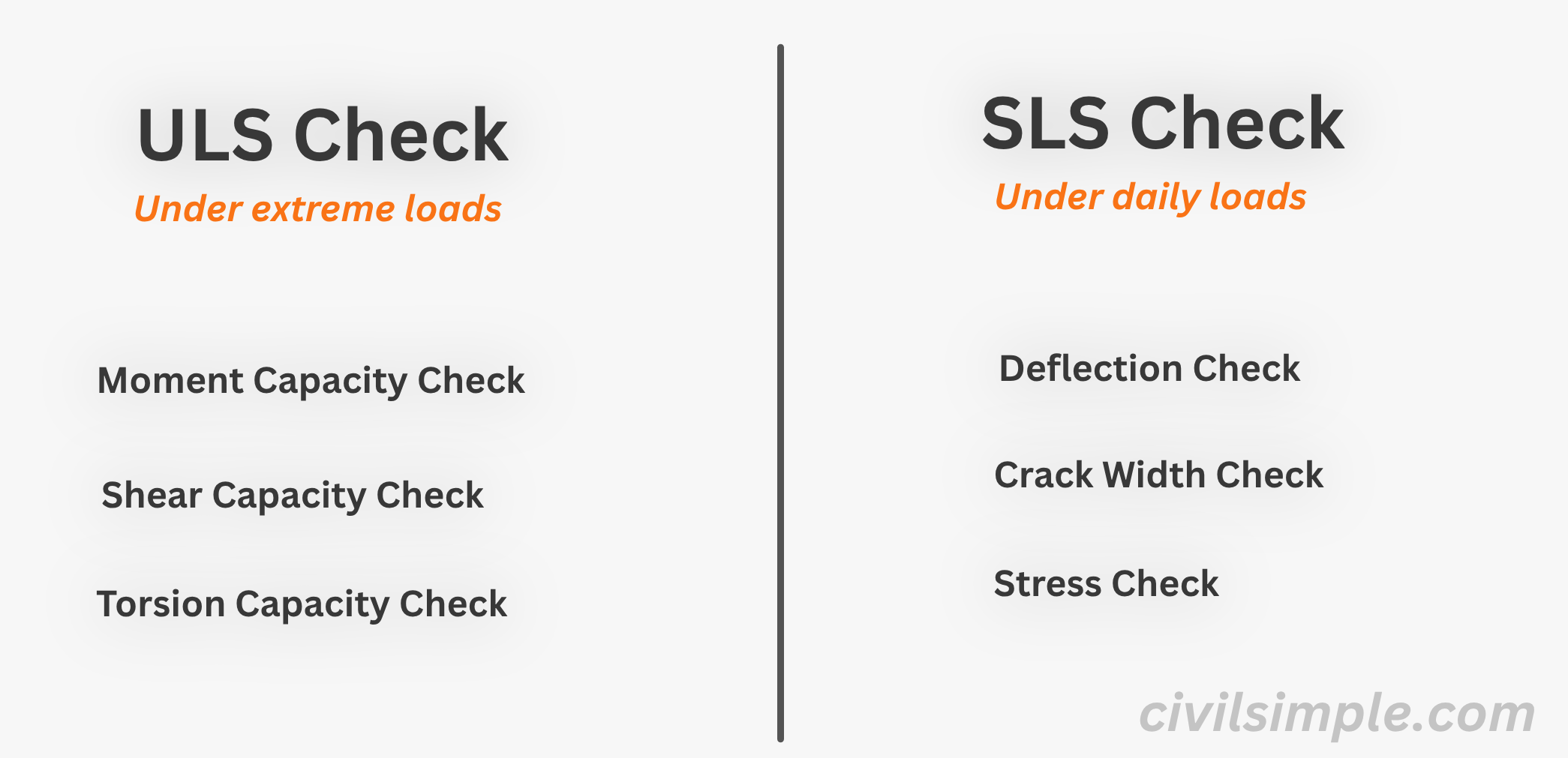
Checking crack width is an SLS requirement. A beam might be perfectly safe from collapsing (passing ULS), but if it develops massive, visible cracks under normal loads, it fails the SLS check.
2. Concrete is Supposed to Crack Under Working Loads
It may be a common misconception for beginners that a well-designed concrete beam shouldn't crack at all. In reality, reinforced concrete is also designed to crack.
Concrete is incredibly strong in compression but very weak in tension. When a load is applied to a beam, it bends, creating compression at the top and tension at the bottom. As the tension exceeds the concrete's low tensile strength, fctm, the concrete cracks. This is a normal, as the bottom tension stress provided by tension part is assumed to be from steel reinforcement but not concrete.
3. Why We Limit Excessive Cracking (Durability & Appearance)
While concrete crack is normal, the size of crack matter.
-
Durability: Concrete provides an isolated environment that protects the internal steel rebar from rusting. Once crack become too wide, it let moisture, oxygen and harmful chemical such as chlorides reach the steel. If the rebars rusts and expands, it will cause surrounding concrete to spall and affect the structural integrity.
-
Appearance: In general, people do not feel safe in a building with wide, visible cracks in the ceiling. Limiting crack width ensures the aesthetic finish is acceptable to the users.
Therefore, in many standard code of practice, there will be a set of limited crack width for reinforced concrete under different condition. Taking Eurocode2 as example, it is commonly limited to 0.3mm for the crack width. Further to the limited value will be discuss in another article.
4. Two Main Causes: Flexural vs. Thermal/Shrinkage
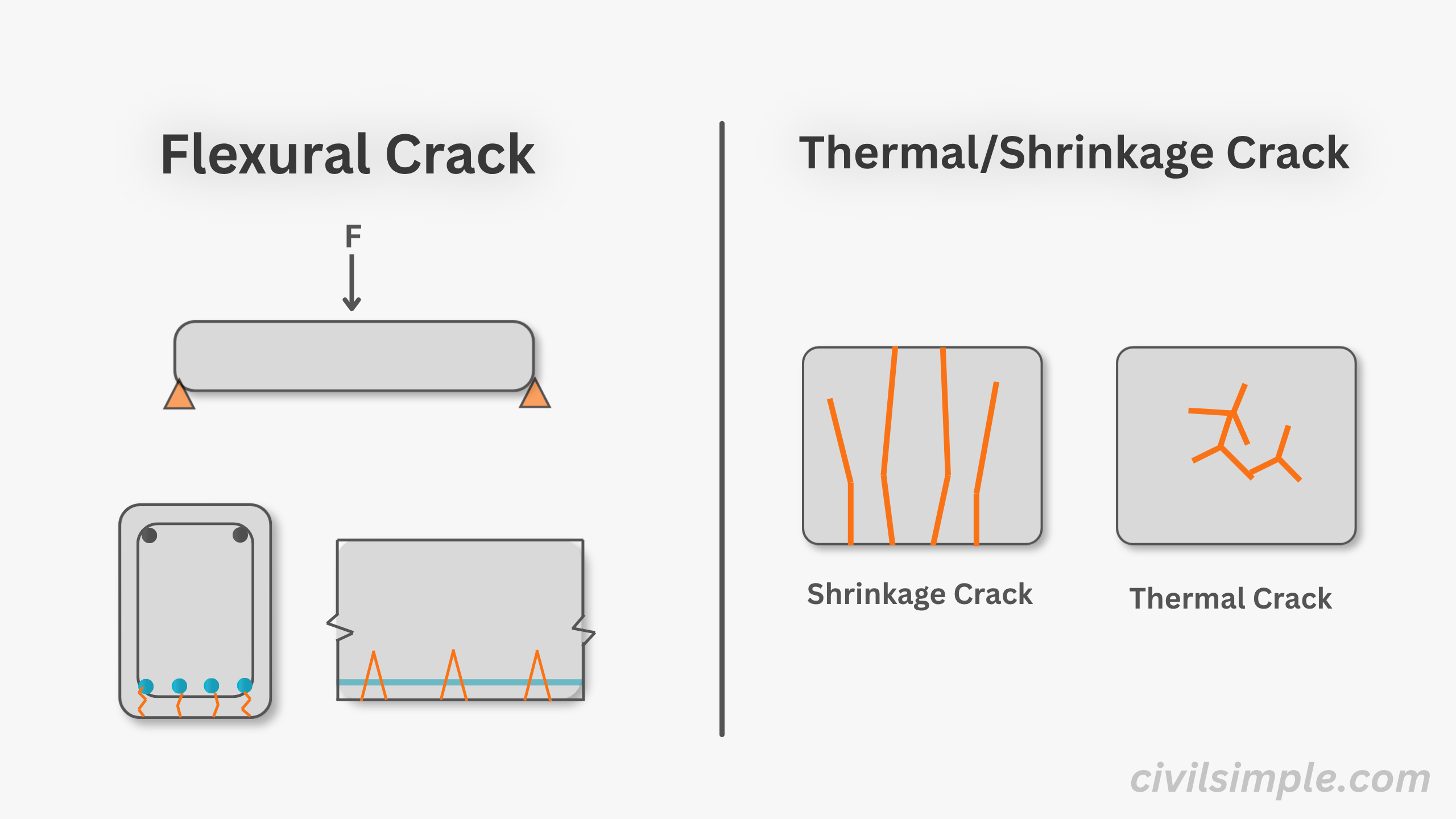
Crack width checks generally fall into two categories based on their cause:
-
Flexural Cracks (Direct Loading): Caused by the bending moments and shear forces from applied loads. These appear at the locations of maximum bending (e.g., mid-span of a beam).
-
Thermal and Shrinkage Cracks (Indirect Loading): Concrete naturally shrinks as it cools and dries, and if it is restrained by its surroundings while shrinking, internal tension builds up until the concrete cracks to relieve the pressure.
Engineers must account for both direct loads and these environmental effects when detailing reinforcement to control crack widths.
5. Calculation of Flexural Crack: Strain Difference and Crack Spacing
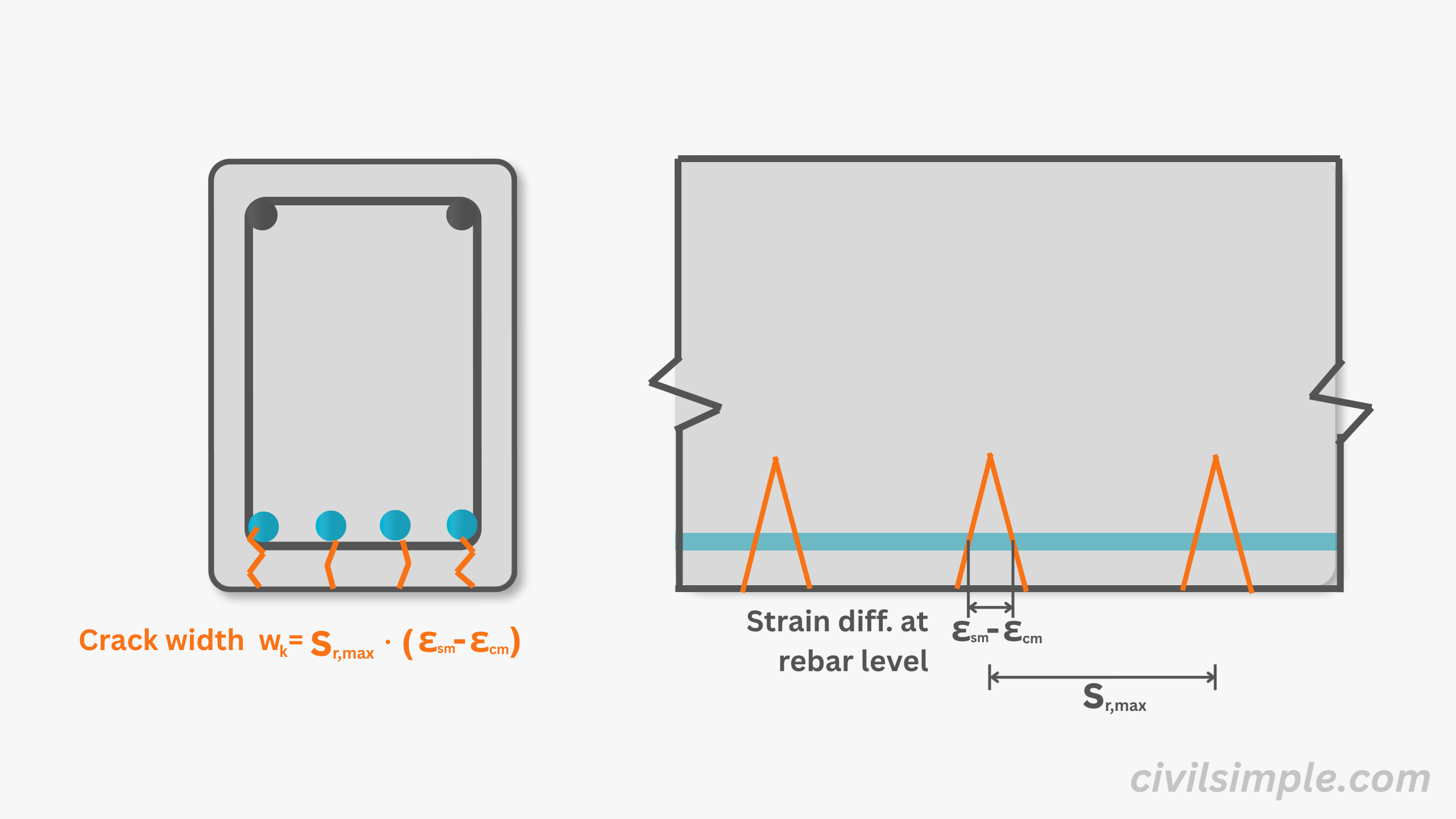
While the full calculation looks intimidating at first glance, the underlying logic of estimating a crack's width is actually quite elegant. It comes down to a simple relationship:
Imagine a section of a concrete beam that has cracked in two places.
-
Strain Difference ( ): Between those two cracks, the steel rebar is stretching under tension. The concrete surrounding the rebar is also stretching slightly, but not as much as the steel. The crack width is literally the physical gap created by this difference in stretching (strain) between the two materials.
-
Crack Spacing ( ): This is an empirical value based heavily on how close your reinforcing bars are to each other, the bar diameter, and the concrete cover.
If the cracks are forced to be closer together (by using closer rebar spacing), the strain difference has less distance to accumulate, resulting in smaller, tighter cracks.

CivilSimple Team
The CivilSimple Team writes practical engineering guides for the profession and the curious. All articles are reviewed for technical accuracy before publication.